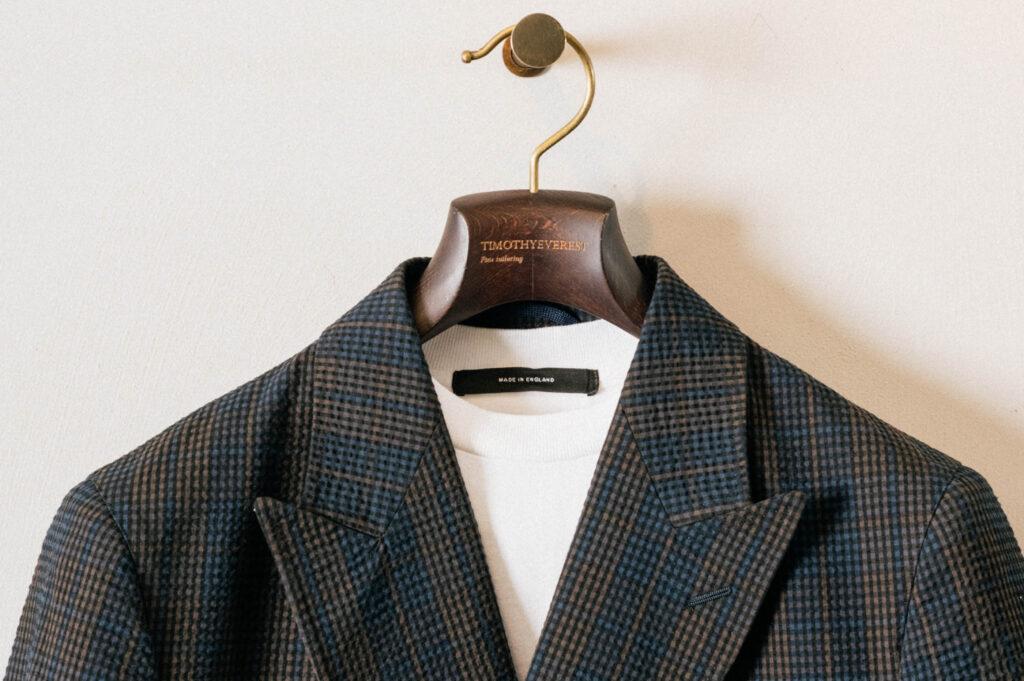
The current (commendable) vogue in wine is to emphasise the importance of the vineyards, the soil, the vines, the importance of place, the terroir. For most winemakers this goes without saying however the rise of the “flying winemaker” (superstar oenologists who consult variously for different wineries, often globally) has set-up a rather artificial dichotomy between those who style themselves as custodians of the vines, whose job it is to merely encourage the grapes to fulfil their potential, and those for whom the grapes are the raw material – which their expert hands fashion in to drops of vinous beauty. The truth inevitably lies somewhere in between, but as Evan Bakke, a biodynamic winemaker in Ventoux states – “it’s man who discovers terroir”. With this in mind, the team at WineChap were delighted to once again be invited to host a “Perfectly Tailored” Tasting at Timothy Everest’s Spitalfields atelier, highlighting wines of consummate craftsmanship, that share the bespoke values of fine tailoring.

Guests were treated to the following wines:
Krug Grande Cuvee
The ultimate example of the importance of craftsmanship and intervention. Around 220 wines from 10 or more different vintages – some of which may reach 15 years of age – are blended to create the unique fullness of flavour, incredible generosity and elegance for which the Grande Cuvee is known. This is impossible to achieve with wines of just a single year. A stay of at least another 6 years in the cellars creates the exceptional finesse which is present regardless of the annual changes in climate, as was Joseph Krug’s vision. All this under the watchful eye of head winemaker Eric Lebel – WineChap previously had a go at blending a cut-down version of their 2011 vintage.
Chene Bleu Aliot 2009
A wine in the style of the Northern Rhone. The vineyards are situated at the crossroads of 4 Rhone appellations near Gigondas, and the wines for the Aliot are 7 years old and north facing at 550m. This is a biodynamic wine but requires a huge amount of work and effort. Their exacting standards of quality control can be found throughout the vinification process. Hand harvesting, double selection, gravity flow in the winery, small tanks to vinify each mini-block separately, a combination of oak, concrete and stainless steel tanks, scrupulous hygiene and storage, and bottling according to the biodynamic calendar on ‘fruit’ and ‘flower’ days all combine to create this exceptional white Grenache.
Vina Alicia Tiara 2011
A wine with an experimental blend from vineyards in Lunlunta at an altitude of 900m, looking over the bed of the Mendoza River. The rare combination of 50% Riesling, 40% Albarino and 10% Savagnin, three grape varieties native to Europe, has created an unusually energetic and nuanced white wine blend, typical of Vina Alicia’s experimental philosophy. The wine is kept on the lees for 12 months to develop the complex and unique taste, and to preserve freshness is not aged in oak barrels, but bottled directly. Only 2,000 bottles are hand crafted every year – it really is a labour of love.
Puligny Montrachet Les Levrons Domaine Bitouzet-Prieur 2010
With origins in two of the Cote de Beaune’s most prestigious villages Volnay and Meursault, the Bitouzet-Prieur family Domaine has been handed down for 5 generations. The chardonnay grapes used come from multiply-owned vineyards, yet different expressions are wrought from the soil. The grapes are handpicked and brought to the cellar without crushing and are then pressed in a pneumatic press, after which the musts are left to settle for 12 to 18 hours. Both the alcoholic and maloactic fermentation stages take place in the barrel, 15% of which are new each year. The wines are racked before harvest, and stay for another 4 or 5 months prior to bottling.
Mastrojanni Rosso di Montalcino 2010
A traditional and terroir driven wine, the winery eschews the use of barriques as one might expect from such traditionalists. Mastrojanni believe that a winemaker is like a doctor; spot a problem and then cure it, but better yet prevent problems from arising by a careful and continuous presence in the winery. Here winemaker Andrea Machetti knows every details from a barrel which needs replacing to the a plant in need of help – he is at the beck and call of the wine.
Roda I Reserva Rioja 2006
Roda uses grapes from more than 20 carefully supervised vineyards amongst Rioja’s best terroirs, and then only grapes from the most superior 17 blocks are used in the Reserva ensuring superior grape quality – the concept of single vineyards is rare. The vines are over 30 years old and the yields are kept low, sustainable farming practices are used and vertical basket presses are used to crush the grapes in the gentlest manor possible. The wine is ages in French oak (50% new) for 16 months and then held back in the bottle for an additional 20 months prior to release.
Chateau Langoa Barton 2002
The wine is made up of a blend of ¾ different parcels of grapes from across the gravelly-clay soils of the vineyards. The vinification process is traditional – it is matured for 18 months in oak barriques (50% new). This wine is vinified and matured in the same traditional way as Leoville Barton, the only variations being put down to the variation in the soils and exposure.
Royal Tokaji 5 Puttonyos Blue Label 2008
The world’s original sweet white wine. The wine is a carefully balanced mixture of paste and grapes which takes great skill. Aszu grapes are picked into 20 litre wooden tubs called puttony, and are then crushed releasing intensely sweet juice, whilst the non-aszu grapes are vinified to make a base wine. The number of puttony (20kg) per barrel (140kg) gives the final puttonyos level of the wine. Fermentation takes place in 140l Gonci barrels made from Hungarian oak, and can take from 1 to 2 years – Aszu wines must legally be matured for 3 years, though Royal Tokaji wines are usually ages for longer. One vine yields approximately one glass of wine.